
The care behind every piece
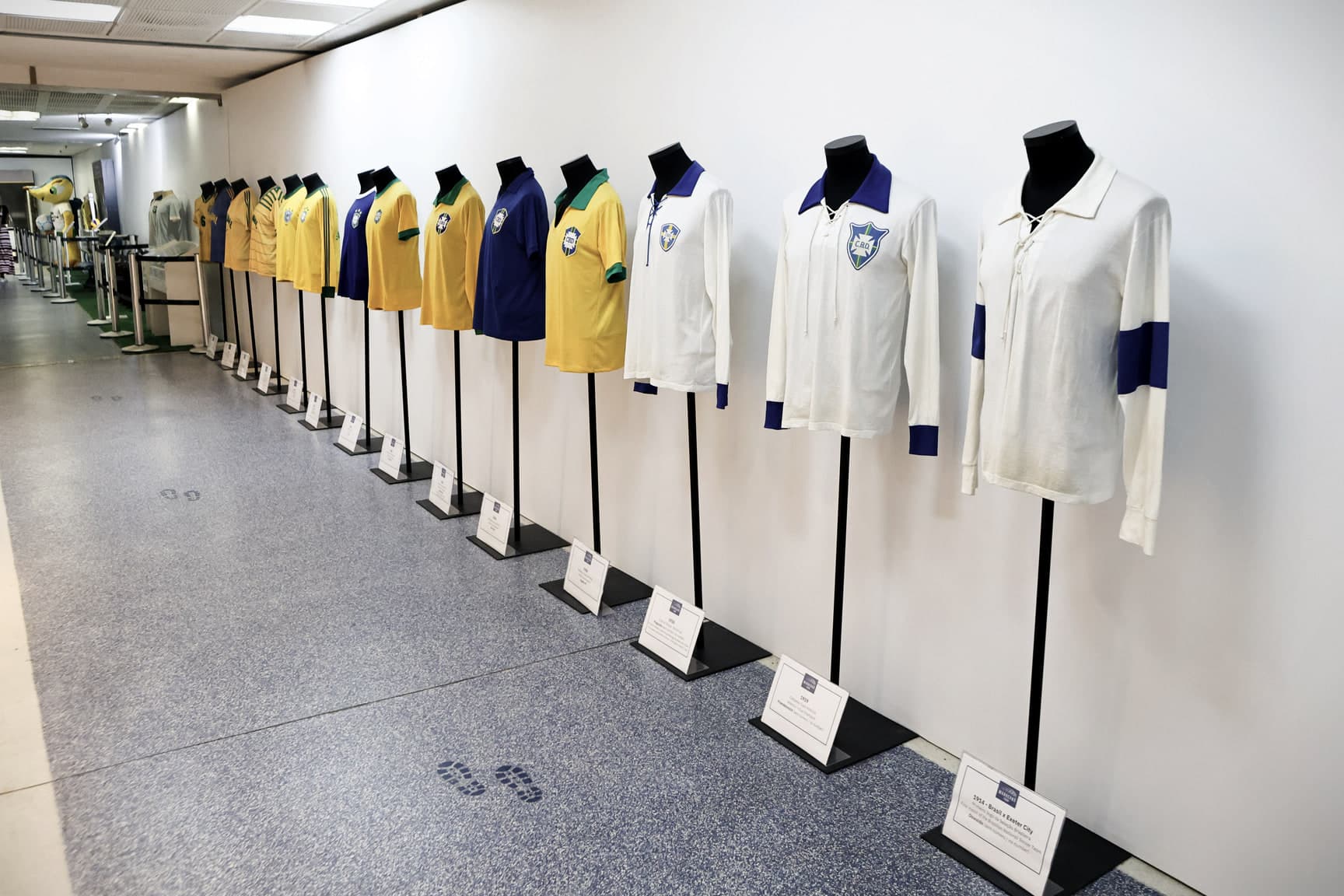
When you stop in front of a shirt, a trophy or a document in the museum, you are seeing only the end of a long journey.
Behind the scenes of the Tour Maracanã, Viva Maracanã, which runs the tour and the museum, looks after every stage of that journey: curation, which decides what to tell; conservation, which makes sure the pieces last through time; transport, which moves them safely; and exhibition, which turns them into emotion.
In this guide, we show what usually stays out of the visitor's sight and why every detail matters, so that the story of the Maracanã is told with truth and respect.
Curation: how we decide what to tell
The curation of the Tour Maracanã collection starts from a simple question: what story does this piece help tell? A shirt, a ball or a yellowed ticket only becomes part of the exhibition when it has a narrative that can be proven.
Research and provenance. Before going on display, every item goes through historical research. Who wore the piece? In which match or on which occasion? Are there documents, photographs or testimonies that confirm it? A piece with no verified provenance does not tell history: it tells supposition, and the museum does not work with suppositions.
Flamengo and Fluminense. The current management of the Maracanã is Fla-Flu, and the curation reflects that. Both clubs have fundamental milestones in the stadium's history, and both are treated with the same attention, the same depth and the same respect.
Conservation: the care each piece demands
To conserve is to act today so that a piece still exists a hundred years from now.
Each material ages in its own way, and so each asks for its own care. A fabric shirt suffers from light and dust. A paper document is sensitive to humidity. A metal trophy can oxidise. A photograph wears down with exposure to light and with changes in climate.
Temperature, humidity and light. These three factors are monitored continuously. Sudden changes speed up wear, which is why the environment has to be stable.
Conserving is not restoring. To conserve is to slow down wear and keep the piece as it is. To restore is to intervene to recover what was lost, and it is only done when necessary, with judgement and without erasing the history the piece carries, including the marks of time.
Technical reserve. Not everything the museum keeps is on display. The technical reserve is the space where pieces are stored in controlled conditions, waiting for their turn to go into the display case or to be studied.
Transport: how a piece travels safely
Moving a museum piece, even a few metres, takes method. The risk of hasty handling is losing an irreplaceable object forever.
Moving a piece of the collection generally follows these steps:
- Inspection and condition report. The piece is examined and photographed, and every detail, such as a fragile seam or a stain, is noted before it leaves its place.
- Made-to-measure packing. Neutral materials and supports suited to the shape and material of each item.
- Insurance and logistics. Route, transport and the people in charge are defined before the move.
- Escort during the move. The piece never travels alone: a responsible team is with it all the way.
- Check on arrival. The piece is inspected and compared with the initial record, to confirm it is exactly as it left.
Exhibition: from the project to the display case
Once researched, conserved and transported, the piece reaches the moment when it meets the public. This is where technique becomes experience.
The exhibition design. Before the installation, there is a script: which stories to tell, in what order and at what pace. The route was designed to alternate information and emotion.
Lighting, display cases and supports. The light that shows a piece off has to be the same light that protects it. Display cases and supports hold each item without harming it, and the position of each object is calculated so that the piece is both well seen and well cared for.
Texts and captions. Each caption answers what the visitor wants to know: what it is, when it is from and why it matters. The language is clear, so that anyone, of any age, can understand and be moved.
The Casa do Inesquecível. It is the central space of the experience at the Tour Maracanã, where the memory of the stadium and of football takes shape.
See the result up close!!
